Latest Job Opportunities in India
Discover top job listings and career opportunities across India. Stay updated with the latest openings in IT, government, and more.
Check Out Jobs!Read More
Is the United States shooting itself in the foot by excluding STEM talent?
Interest in science, technology, engineering, and mathematics (STEM) courses among U.S. residents has grown at a much slower pace than among nonresidents. | Image source: Dado Rovik
Which was recently introduced Visa fee: $100,000 For new H-1B workers in the United States, it particularly hurts Indians, as it has previously Data point The story showed. But is the United States shooting itself in the foot by alienating the STEM talent it has relied on for so long?
Jobs in the information technology sector in the United States, officially known as “computer and mathematics occupations” by the US Bureau of Labor Statistics, grew by about 40% between 2016 and 2024. This makes the information technology sector one of the leading sectors in the labor market.

The chart below shows the sectoral change (%) in jobs available in the United States between 2016 and 2024 (horizontal axis). Sectoral share of foreign-born workers (vertical axis). The larger the circle, the more people were employed in that sector in 2014. The farther to the right the circle is, the greater the job growth.
Aside from the IT sector, only two other sectors have recorded faster growth in the United States – healthcare support roles, such as nursing, and jobs in the life sciences, physical sciences, and social sciences. The IT Support and Healthcare sectors appear in the upper right of the chart.
This suggests that it is among the fastest growing sectors, with a slightly above average proportion of foreign-born workers – about 25% of the workforce in 2024.
Notably, this share has remained unchanged since 2016, suggesting that the representation of foreign-born workers has remained stagnant despite strong overall job growth.
Should US President Donald Trump be concerned about the large number of foreign-born workers in the fastest-growing sectors of the US economy – sectors that owe much of their success to foreign talent?
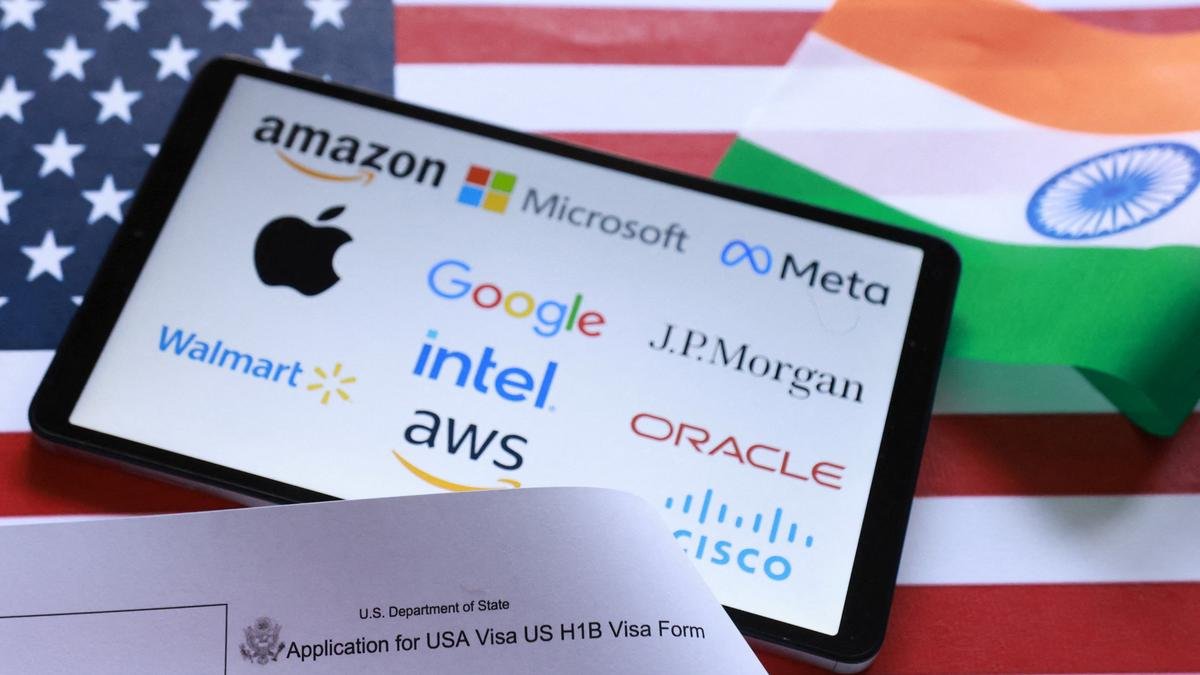
Indian IT companies no longer primarily use the H-1B visa to send workers to the United States. Currently, American technology giants such as Apple, Microsoft, and Meta are also among the largest employers of H-1B talent.
The question is whether recent policy changes will disrupt the flow of STEM talent, thereby slowing job growth.
According to the Bureau of Labor Statistics, science, technology, engineering, and mathematics (STEM) occupations are expected to grow by more than 8% over the next decade. As shown in the chart belowCompared to just 2.7% for non-STEM jobs.

Does the United States have enough domestic STEM talent to meet this increase in demand? The data suggests that may not be the case.
Interest in science, technology, engineering, and mathematics (STEM) courses among U.S. residents has grown at a much slower pace than among nonresidents. Between 2011-2012 and 2020-2021, the number of non-residents with STEM bachelor’s degrees in the United States rose 148%, compared to just 47% among US residents. The gap is higher at master’s level.
the Chart below Shows science, technology, engineering, and mathematics (STEM) degrees awarded by U.S. institutions by degree level
In 2020-2021, only 55% of those earning a STEM master’s degree in the United States were residents, while 45% were non-residents. The United States relies not only on foreign-born talent for its current IT workforce, but also on non-residents who will make up a significant portion of its future STEM workforce. These two groups are the ones targeted by Trump’s policies.
the Chart below Shows STEM degrees/certificates awarded by post-secondary institutions, by race/ethnicity for all degree levels
How other countries reacted to the H-1B visa fee increase is also clear. China has promoted its “K visa” as an alternative to the H-1B. The UK is considering reducing visa fees for STEM workers, while Germany’s ambassador to India posted on X a call to welcome Indian professionals. Reports show that South Korea and Japan also have similar plans. Will the United States be able to adapt if global STEM talent begins to choose other destinations?
Data for graphs were obtained from the Integrated Postsecondary Education Data System (IPEDS), the “Foreign-Born Workers: Labor Force Characteristics” report from the U.S. Bureau of Labor Statistics, and the U.S. Citizenship and Immigration Services.
Published – 09 October 2025 at 07:00 AM IST
https://www.thehindu.com/data/is-the-us-shooting-itself-in-the-foot-by-pushing-out-stem-talent/article70138060.ece?utm_source=flipboard&utm_content=TheHindu%2Fmagazine%2FThe+Hindu