Latest Job Opportunities in India
Discover top job listings and career opportunities across India. Stay updated with the latest openings in IT, government, and more.
Check Out Jobs!Read More
The US Department of Agriculture Directory for safe cooking temperatures for meat
We were all there – we grabbed a piece of meat, wondering whether it has already been done or if we were about to serve our family that could make them sick. The safe cooking temperatures for meat are not only numbers that scientists dream of food to make cooking complicated. It is the difference between the meal you can enjoy with the confidence and the confidence that keeps you awake at night.
If you have stood in your kitchen, sit on a piece of meat and wonder, “Is this already finished?” You are not alone. Allow me to share what I learned about the meat cooking safely without turning it into skin.
What are the temperatures of safe cooking for meat?
The US Department of Agriculture has lifted the heavy lifting here, as it tests exactly the temperatures that eliminate bad bacteria that can make you sick. Think of this as a non -commission:
Basic temperatures:
- Chicken and turkey chicken (Complete or land): 165 degrees Fahrenheit (74 ° C)
- Cow meat, veal, lamb (Meat slices, barbecue): 145 ° F (63 ° C) + 3 minutes rest
- Cowed meat/pork/pregnancy: 160 degrees Fahrenheit (71 ° C)
- pork (Pieces, barbecue, decreasing): 145 degrees Fahrenheit (63 ° C) + 3 minutes rest
- Fish and shellfish: 145 degrees Fahrenheit (63 ° C)
- Residens and casseroles: 165 degrees Fahrenheit (74 ° C)
- Egg dishes: 160 degrees Fahrenheit (71 ° C)
Here is what the research tells us: These temperatures are not arbitrary. At 145 degrees Fahrenheit, harmful bacteria die in whole meat pieces. Folded meat needs this additional heat (160 ° F) because grinding spreads any superficial bacteria throughout the entire part.
The bottom line: These temperatures are your shield against a disease that transports it from food while maintaining meat is actually enjoyable to eat.
Why can uncooked meat make you sick?
The center of control over diseases is estimated 48 million Americans get food poisoning every yearAnd incorrectly cooked meat is often the perpetrator. This is nearly one of every six people – light possibilities for something that can be completely preventable.
People who worried about it more? Children under the age of five, anyone over 65 years old, and people with threats. For them, it may give you bad pain that can land them in the hospital.
But this is the thing that really received: Research shows that cooking meat to appropriate temperatures does not mean sacrificing flavor. This means cooking smarter, not just longer.
The main insight: Delicious food and food are not enemies – they are actually the best friends when you know what you do.
Why can you not rely on color or juices to see if the meat has ended

We have all heard the advice of old schools: “If the juices are clear, it has been done” or “just cut them open and look.” Unfortunately, your eyes spin on our responsibility like a weather when it comes to food safety.
This is what I learned in the difficult way:
- Chicken color varies Based on what the bird ate and how old it was
- The minced meat can look completely brown Before hitting safe temperatures
- Pig meat may seem completely cooked While it still houses harmful bacteria
- Fish can beautifully peel off And it is still not desirable in the interior
Many home chefs have suffered from this: meat that looks perfect from the outside but reveals itself not cooked when they are Check with the thermometer. It is frustrating, but this is why visual signals cannot be trusted alone.
Checking reality: The color and texture can lie to you every time. The temperature only says the truth.
How to cook meat slices safely without sacrificing flavor

This is where the personal preference meets food safety. The US Department of Agriculture recommends 145 degrees Fahrenheit for all slices of beef, but many fans of meat slices prefer their meat closer to 125 degrees Fahrenheit for a rare or 135 degrees Fahrenheit for medium rare.
For me personally? I love the meat slices (about 145 degrees Fahrenheit), which happens to match the recommendations of the US Department of Agriculture. But for everything else – chicken and pork, especially minced meat – stick to the recommended temperatures. Golden beef, is actually better, so go to 160 degrees Fahrenheit or even the highest ideal work for my taste.
Wheat’s temperature guide:
- Average (US Department of Agriculture is safe): 145 degrees Fahrenheit – The pink is still in the center, the juice texture
- The middle well: 150 degrees Fahrenheit – a small pink center
- I did well: 160 degrees Fahrenheit+ – screw through
The secret? Pull the meat slices at the right temperature completely and let them rest for three minutes. The rest period is not only for display – it allows juices redistribution and temperature even outside.
Game change: In fact, exact cooking makes the steaks more soft, not less.
Why use digital or wireless meat is necessary
After years of guess and sometimes you make it wrong, using a Wireless meat It has become not negotiable for me. There is something reassuring to see this exact number instead of questioning and anxiety.
I went through a lot of moments when I reviewed the meat, believing that it was done, just to find it needed more time. Using a good digital heat scale, you can return it with confidence to cook for a longer period, then check again until you press your goal. No more pieces in the meat prematurely and destroy the presentation, or what is worse – extracting something unsafe.
It gives you a high -quality digital heat scale:
- Quick and accurate readings– There are no more guess games
- Trust in cooking safely– In particular with chicken and ground meat
- Better results– You can click on your favorite donation every time
- A peace of mind– Especially when cooking for the family or guests
For those who want more comfort, wireless models such as Typhur Sync Gold Dual Let the temperatures be monitored remotely through the application, which eliminates the need to constantly verify and lose the heat from the oven or grill.
The bottom line: A good thermometer converts cooking from guessing to accuracy, whether you use a basic digital model or a high -tech wireless version.
Safe heating temperatures for remains and mixed dishes

This is where many people slip. All the remaining meat should reach 165 degrees Fahrenheit when re -heated, regardless of the temperature that was originally cooking it. This includes:
Young children are particularly difficult because they create hot and cold spots like a mixture of mixture. It is always worth checking multiple areas using a heat scale, especially in thick dishes such as lasagna.
Professional advice: Let the heated food sit for a minute after heating, then check the temperature. Sometimes what feels hot out is cold in the middle.
Tips for juicy meat: cooking to the appropriate temperature every time

Here is what makes all the difference: cooking to fine temperatures rather than excessive formation “just to be safe”. When the micro temperature results:
- Chicken in 165 degrees Fahrenheit It remains incredibly moist (not the cardboard tissue of excessive chicken)
- Pork in 145 degrees Fahrenheit With appropriate comfort is soft and delicious
- Fold meat at 160 degrees Fahrenheit exactly It has a good texture instead of this dry chaos
This technique that works well: remove the meat about 5 degrees Fahrenheit before the targeted temperature and allow the fun to finish the task-such as leaving the wine breathing-can produce results of a restaurant quality at home.
Revelation: The accuracy is not difficult. It comes to getting better results with less effort.
Egg dishes, vessels prescribed vessels
The temperature exceeds the simple cuts of meat. Egg -based dishes such as Quiche need to hit 160 degrees Fahrenheit all the time. Steam shots with multiple ingredients can be significantly different in different spots.
This is especially important with your thick, Class dishes such as breakfast dishes This may seem perfect at the top but still barely warm in the middle. Verify multiple stains using a heat scale until heating all the time.
A real conversation: The more thickness of the dish, the more important it becomes to check multiple stains using your heat scale.
Final ideas

Cooking safely does not mean sacrificing flavor or eliminating your entire evening worried about whether dinner will make a sick person. With appropriate tools and knowledge, you can cook with confidence every time.
The difference between a nervous and confident cook? It is like a difference between driving with GPS vs. Hoping to remember the way. One approach gives you where you want to go reliably; The other lets you cross your fingers and hope for the best.
Whether you are feeding your family on Tuesday night or host friends for the weekend, hitting appropriate temperatures means peace of mind and really better foods.
Common questions about the temperatures of safe cooking for meat
Q: What is the temperature that the chicken should reach to be safe?
A: Chicken must reach an internal temperature of 165 ° F (74 ° C) to kill harmful bacteria and make sure they are safe to eat.
Q: How long should I let the meat rest after cooking?
A: You should rest both pieces of beef, pork, meat and pregnancy for 3 minutes after reaching 145 degrees Fahrenheit. This helps to redistribute juices and maintain the soft meat.
Q: Is a rare medium steak safe to eat?
Q: Why do ground meat need to be cooking higher than the meat slices?
A: Grinding should reach bacteria throughout the meat, so minced meat, pork or lamb must reach 160 degrees Fahrenheit to be safe.
Q: What is the best way to check the meat temperature?
A: Use a digital or wireless heat scale in the thick part of the meat, avoid bones or fat, and check multiple stains in larger pieces.
Q: How can I safely reheat food residue with meat?
A: Restore food residue to at least 165 degrees Fahrenheit to kill any bacteria. Use a heat scale to check multiple spots, especially in thick dishes or layers such as lasagna.
Are you ready to cook with real confidence? What is the biggest challenge for you when it is safe to cook meat safely? I would like to hear about the kitchen (or disasters) victories in the comments.
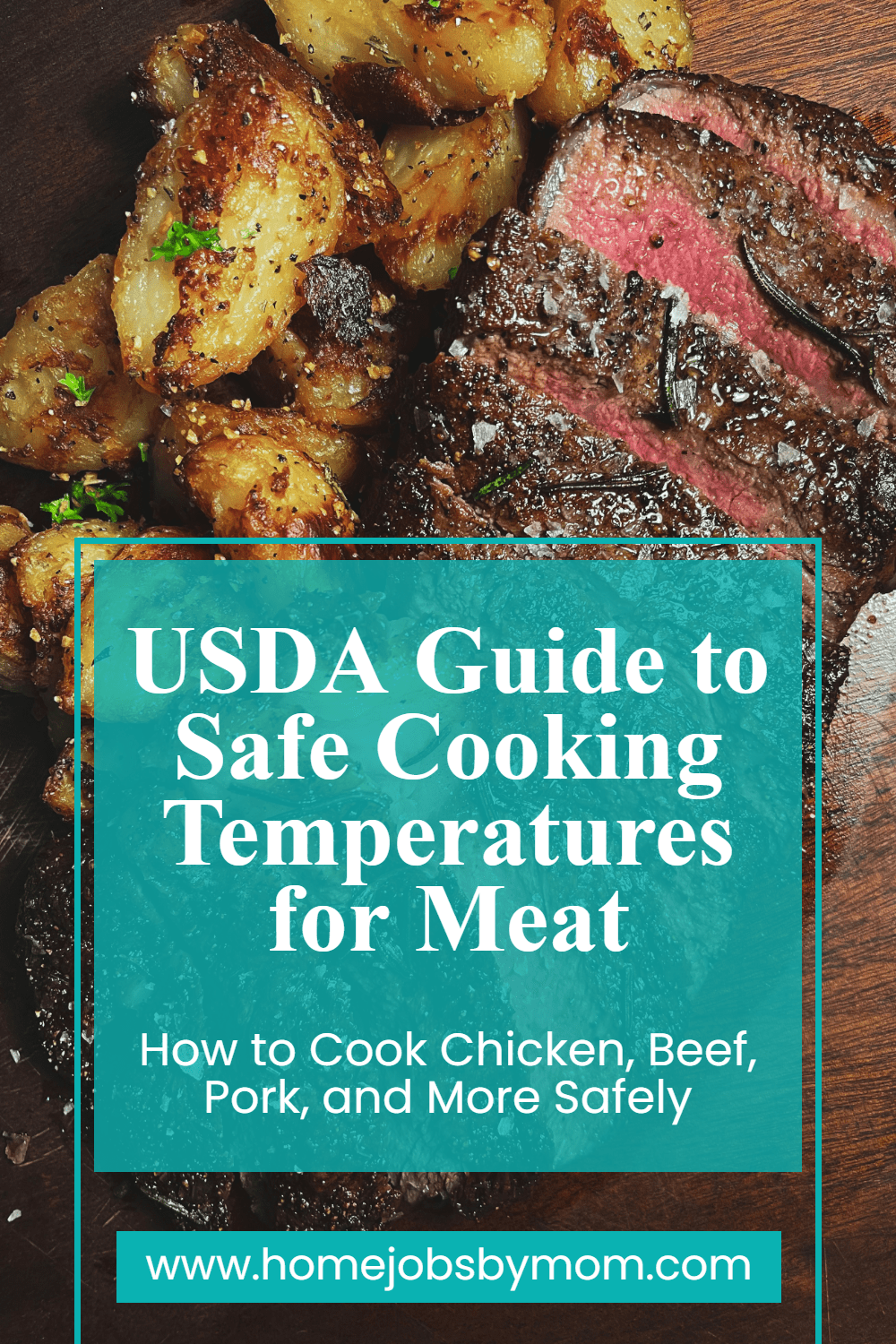
USDA Guide to Safe Cooking Temperatures for Meat: How to Cook Chicken, Beef, Pork, and More Safely