Latest Job Opportunities in India
Discover top job listings and career opportunities across India. Stay updated with the latest openings in IT, government, and more.
Check Out Jobs!Read More
✨ Explore What is it required to break the global stalemate of the Plastic Treaty? | Opinion Environmental works
— your ultimate guide
Today’s article:
Again, we left negotiations without a global plastic treaty.
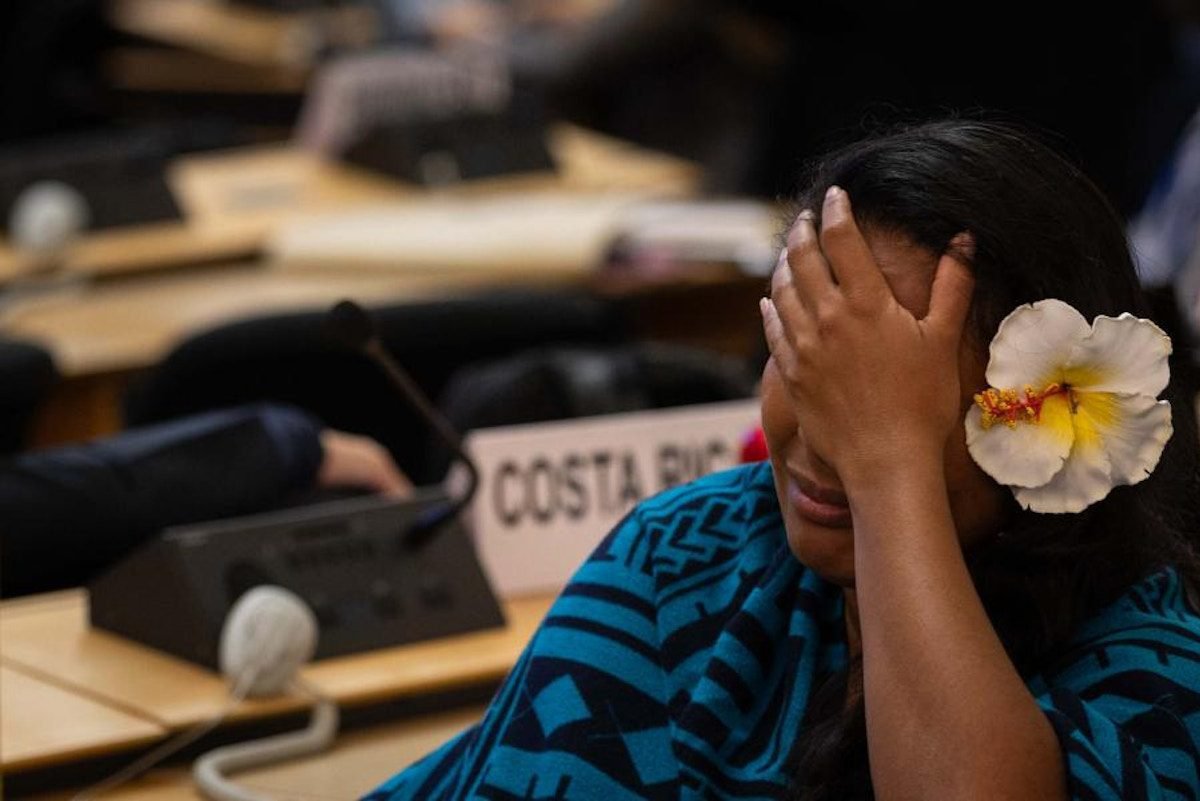
Under this empty paper lies a messy text. I heard about friends who woke up at the conference, waiting and waiting for an update on the general time. I saw people sleeping on the grass outside the assembly hall. I heard about the delegates who slept during the markets because they were ready to negotiate until four in the morning. But despite the sacrifices made, we all saw that the treaty falls again.
Since then, thousands of feelings have been flowing into my head. I feel dismayed on the chair, which must feel that they will never be able to make anyone happy. I feel distress from countries that have given priority for selfish material interests before justice, science, logic and their obligations towards future generations. I feel the terrible defeat, just as I did last year when Singapore announced a fun Open a new manufacturing factory Just one week before the next round of the treaties of the treaty, the International negotiating committee 5.1 (INC-5.1).
There is a lot at stake. Many people and the health of our planet on the line. However, there was no progress. Who is the error? That a few, or for everyone? Did the treaty negotiations stop forever? What if INC-5.3 has become a repetition of INC-5.2?
I was trying to assemble parts of the Panorama puzzle together, and know the error that happened.
On the one hand, I am not comfortable with a language that blames, finger points, or perpetuates stereotypes around certain cases. On the other hand, the ostrich in negotiations is exactly what allows member states to continue to ban the treaty.
When countries still ask the same arguments they asked in Inc-2, or reopen questions that have already been resolved, I think we can all agree: the Inc broken process.
So, what do we need to do to break the stalemate?
1. Rejection of the global consensus
“Stop hiding behind the consensus.” This was a repeated invitation from civil society and law holders at the Iraqi National Congress. The discussion was on how to formulate a treaty suspended almost fatefully, every company like a storm cloud. However, without the death of this cloud, procedural uncertainty will suffer from negotiations forever.
In the past few conferences, it was encouraging to witness record levels to support ambitious proposals on human rights, chemicals of anxiety, plastic products, production caps, and more. At the United Nations Oceanic Conference in June, 95 countries supported the gentle invitation to an ambitious treaty on plastic pollution – a declaration called for a stronger plastic material treaty covering the full life cycle of plastic, including production and consumption, and includes legal binding obligations to get rid of plastic and chemicals that cause concern in plastic products.
By the second day of INC-5.2, 130 unprecedented countries expressed their support for the suggestion of Switzerland/Mexico on global control measures of plastic products. Such a global unit of a strong treaty is striving and impressive-however, progress remains blocked by a minority of countries, where we have not been able to reach a consensus.
Throughout the Iraqi National Congress, we saw a steady weakness of what should be considered the minimum treaty. We have seen watered from the text to one that no longer fulfills the original Unea 5/14 mandate.
The most crazy thing is that it is just a small group of countries that do not firmly agree on anything that will be effective in curbing plastic pollution.
It is not logical that we must have an individual party that prevents the interests of the majority, especially when the formation of an environmental treaty is based on the idea that we are here to serve common common interests and not private narrow interests.
The representative of the Senegalese put this completely: “Let me tell you what I think is consensus. The consensus in reality kills democracy, this imposes unanimity. If only one of the two countries agreed, then the whole thing stops. In these circumstances, how can we make progress?”
History has repeatedly warned us that the consensus kills the status of effective rules. There is no government around the world, regardless of the extent of democracy, can exercise a real consensus system, so why do we now expect the bodies of developing international rules?
2. Allow the intervention of the observer
Beyond the process, how can we make sure that negotiations can reach a meaningful and objective conclusion?
I heard one of the delegates say, in the resignation: “We are discussing the same things as we did in Inc-2.”
I heard another lament: “We reopen discussions we have already settled in Inc-1.”
These frustrations envelop the difficulty of trying to create comprehensive and effective spaces.
I met another young man who spoke with a delegate from her country of origin, a state known for prohibiting progressive proposals. The delegate, who was also an economist, participated that the position she had to carry was inconsistent with knowledge – yet she had to continue to push her strongly in the negotiations, all for her job in carrying her position.
This one story transmits a bleak fact: What countries consider that their national interests can contradict the knowledge, human rights and justice. With this context, how can we really expect negotiating an effective treaty?
Stalled in this swamp, I think the solution lies in allowing the observer’s interventions.
Some delegations, especially those that are already hostile to civil society, may oppose. But although not currently allowed the Plastic Treaty negotiations, this recommendation is almost radically,; It has been allowed in other multilateral agreements such as the Stockholm Convention.
Since it is unrealistic that the country’s representative always expects to carry a location in line with the knowledge, allowing the space to intervene the observer helps to increase the volume of independent sounds in the room.
Observers may come from NGOs that represent societies and not in the negotiating room, such as clowns, eagle societies and societies, and the people of indigenous people and youth. By raising the voices of these societies that are affected more than the treaty, and distributing effective policies from those that are not based on a ground experience, observers provide a decisive perspective on the ground that helps to determine what makes the treaty effective.
Observers will also include academics and experts, such as the scientists ’alliance of the effective plastic treaty. The amplification of their inputs will contribute to the ongoing efforts to make a science -based treaty in data, not politics.
Solutions in front of us
We are very close to the finish line. However, every time we implement our hands to touch, the ground turns under our feet.
But before we conclude that the marathon training was a waste of time, money and resources, it discovered stones of gemstones on the course of running. They are very young. You will miss them if you continue to flash.
I remember myself repeatedly that we already have a record number of countries calling for a strong plastic treaty, and that the basic messages of the Plastic Treaty: CAP plastic production, global control standards for chemicals – are now stronger than ever.
My recommendations – voting and observer interventions – not new; This was the basis for multiple effective agreements. So let’s pick up our running pace again. Let’s realize solutions in front of us and press for a treaty that addresses the full life cycle of plastic, from production to the end of life.
Teres Tio is the head of the Environmental Youth Group for Singapore Youth of Climate Work (SYCA), where she participated in the leadership of the plastic treaty working group. The plastic treaty has tracked since the beginning of 2024 and attended INC-5.2 in Geneva. Teoh is also a law student in law at the University of Singapore Management. I wrote this article on behalf of the SMU Environment and Sustainability Club.
Read the full article at: https://www.eco-business.com/opinion/what-will-it-take-to-break-the-global-plastic-treaty-deadlock/
Stay updated with Eco-Business: News, Opinion, Jobs, Events, Press Releases and Research for topic Corporate Responsibility
—
**Additional Resources & Tags:**
– Author:
– Published on: 2025-09-23 19:00:00
– Tags: ,
– Related Rules: [rule_{ruleNumber}], [rule_{ruleNumber}_plain]
**Visuals & Media:**
– Featured Image: https://eco-business.imgix.net/ebmedia/fileuploads/IISD-ENB_INC5.2_15Aug25_KiaraWorth-30.jpg?fit=crop&h=801&ixlib=django-1.2.0&q=85&w=1200
– Enclosure Link:
**URL & Links:**
– Post URL (slug): what-is-it-required-to-break-the-global-stalemate-of-the-plastic-treaty-opinion-environmental-works
– Encoded URL: https%3A%2F%2Fwww.eco-business.com%2Fopinion%2Fwhat-will-it-take-to-break-the-global-plastic-treaty-deadlock%2F
– Decoded URL: https://www.eco-business.com/opinion/what-will-it-take-to-break-the-global-plastic-treaty-deadlock/
– Redirect URL: https://www.eco-business.com/opinion/what-will-it-take-to-break-the-global-plastic-treaty-deadlock/
– Source Domain: www.eco-business.com
**Meta & Miscellaneous:**
– Publication Time: 1758680277
– Hashtags: #required #break #global #stalemate #Plastic #Treaty #Opinion #Environmental #works
– Custom Prompt/Note: Prompt
—
**Sample Post Title:** What is it required to break the global stalemate of the Plastic Treaty? | Opinion Environmental works