Latest Job Opportunities in India
Discover top job listings and career opportunities across India. Stay updated with the latest openings in IT, government, and more.
Check Out Jobs!Read More
Climate suggests rises worldwide, with carbon washing compensation – but Asia is backward | News | Environmental works
A a report It was published by the Sabine Climate Change Center at Columbia College of Law As of June 2025, 3,099 climate-related cases were brought through 55 authorities since 1986-an increase of 2,180 in 2022 and 884 in 2017.
Among them, nearly two -thirds of (1986) was presented in the United States. The other hot points were Brazil, the United Kingdom and Germany, and each of them has more than 50 cases. Cases from the global south are still less than 10 percent of the total, but they are steadily growing.
In Asia and the Pacific, most cases were presented in Australia (161), New Zealand (36), followed by Indonesia (15), India (14), South Korea (12), Pakistan (6), China (5), Japan (5), Nepal (4), Papua New Guinea (4), Philippines (3) and Thailand (1).
The courts in Malaysia, Singapore, Brunei, Myanmar, and Vietnam have not heard a climate case.
The report, Climate change in the court hall: emerging trends, antiquities and lessonsIt is the fourth in a series launched in 2017, where he examined suspended cases and court decisions over the past four decades.
The development of the case Canceles since 1986, when the first climate case (click to be enlarged) was recorded. The files of the new cases began to spread after the signing of the Paris Agreement in 2015. Source: Sabine Climate Change Center
Since the first registered case in 1986, the climate vowing has expanded. Local issues targeted governments on climate rights, extracting fossil fuels, carbon banks and climate immigration. Co -claims against companies have addressed duties to reduce emissions, responsibility for climate damage, and the role of banks in financing climate harm projects, and Green wash.
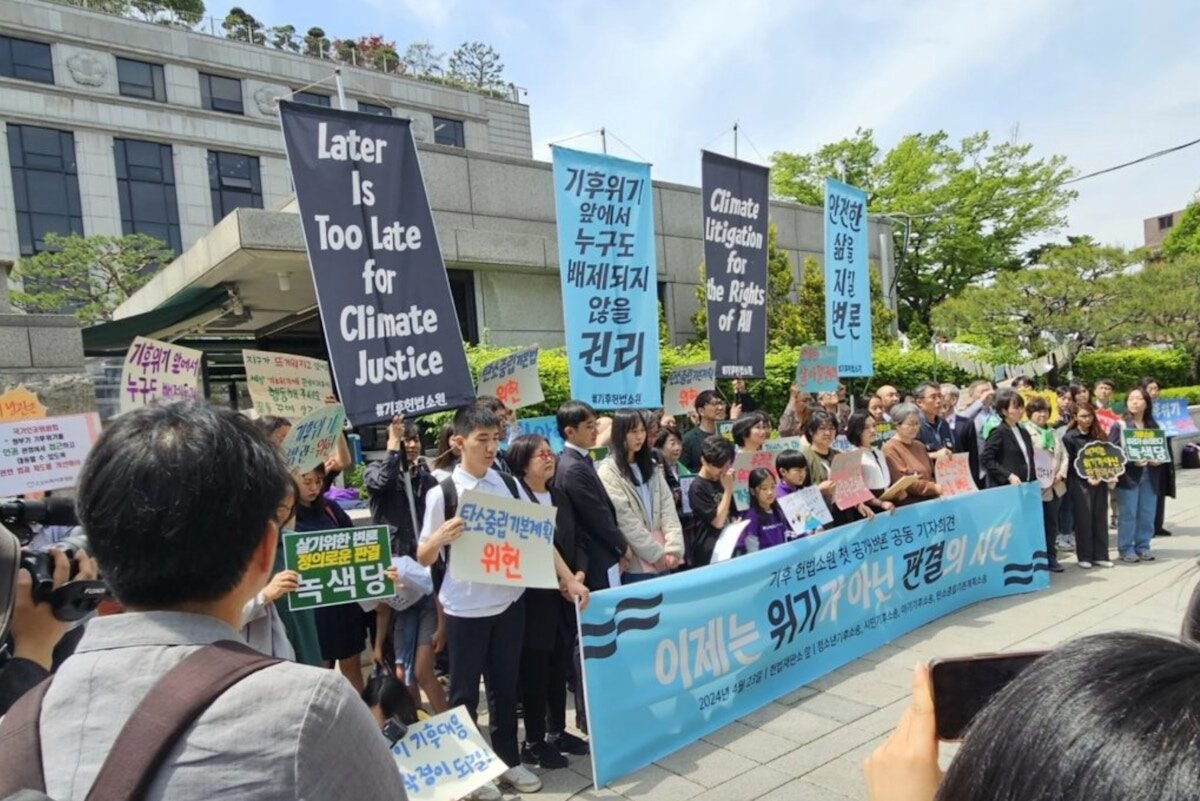
In Asia, some of the latest cases of climate courts in Korea, including a lawsuit filed by farmers looking for compensation for Kepco, were submitted, under the pretext of fossil fuel emissions that have contributed to economic and emotional damage. South Korea was Asia The first country to rule This climate action taken by the government is insufficient in the rule of a teacher last year.
The report highlighted the global cases of the teacher. In 2024, the International Court of Sea Law announced that the 170 parties to the United Nations Convention on the Sea Obligations Law to address the marine pollution associated with climate change.
Earlier this year, the African Court of Human Rights and Peoples has been petrified to clarify human rights obligations in African countries on climate change, While in July, the International Court of Justice confirmed the legal obligations of the states In the climate procedure after a request from the United Nations General Assembly.
The Human Rights Law is increasingly used to framing government obligations, especially in Europe, but also in countries like Pakistan, while climate support science provides stronger reasons for prosecutors by linking greenhouse gas emissions to specific severe weather events. The report said that even when the decisions are suspended, strategic claims can exert pressure on governments and companies, which leads to reform and the abolition of the embargo.
However, the courts often require proof of individual and immemorial damage to granting the victim’s condition, which may be difficult to prove in view of the effects of climate change. The report finds that weak enforcement may also limit the effectiveness of judgments.
In Japan, many cases were brought against the state and companies to prevent thermal energy – but it failed. The Japanese courts have constantly ruled that the climate -related damage falls under public, not individual interests. In a case that ended last year, the Tokyo Supreme Court rejected the claims made by Yokosuka citizens against the Minister of Economy, Trade and Industry, and decided that preventing climate damage cannot be protected through individual rights.
Likewise, in the challenges facing the coal factory projects in Kobe, the Osaka Supreme Court did not find any causal link between emissions and climate damage, despite recognition of risks to health and life. The allegations of “the right to a stable climate” were also rejected, with courts that this right was not legally established.
Looking at the role of companies in exacerbating the effects of climate change, the climate litigation claims began to focus on credit duties for corporate managers. In Korea in 2023, the prosecutors claimed that the director and references to serve national pensions had violated their credit duties and did not run enoughD Climate risk by failing to implement the gradual disposal of coal. At the time of writing this report, the issue is still revolving.
“Antagonist” is gaining momentum
The report found that the “anti -movement” litigation is high. These include efforts to decrease environmental protection, or the non -advanced ESG in investment, or intimidate climate advocates through criminal charges and civil allowances. Strategic claims against general participation (SLAPS) has been increasingly used to target journalists, NGOs and demonstrators who oppose fossil fuel projects.
Nearly three quarters (73 percent) of Slapps cases were brought between countries in the global south-and a quarter of all SLAPP cases in Asia-according to 2015-2021 data from the Commercial Resources and Human Rights Center, is a non-profit organization.
SLAPP suits have been increasingly used to cancel the environmental investigation in Thailand. Thai journalist Pratch Ruvenarom She was repeated and repeated By a local mining company operating in Myanmar. Mining companies are the main initiators of Slapp allowances worldwide.
The report concludes that climate litigation is not only a legal mechanism but also a driver of societal standards, and they constitute how to understand climate risk, responsibility and extent of the speed of taking the action.
“Climate litigation has evolved into a powerful global tool for climate work and accountability,” said Ingar Andersen, the team’s executive, in a statement. “Independent judicial systems are necessary to ensure that this transformation is fair and effective.”
https://www.eco-business.com/news/climate-litigation-surges-globally-taking-on-greenwashing-and-carbon-offsets-but-asia-lags/