Latest Job Opportunities in India
Discover top job listings and career opportunities across India. Stay updated with the latest openings in IT, government, and more.
Check Out Jobs!Read More
From the transfer of cheese and stakeholders?
He wrote Amanda Zoren on . Spread Articles.
Sham, Scurry, hem, and Haw’s for the efforts of transformation
Author: Amanda Zain
Stakeholders can be seen as a wild card in our connections. We may not know or understand how their reaction to participation efforts that can cause uncertainty and anxiety while preparing to do our work will be.
IIBA Babok V3 is stakeholder as follows:
A group or individual with a relationship with change, need or solution. Interest holders are often defined and influenced and influencing it. Stakeholders are assembled based on their relationship with needs, changes and solutions.
The stakeholders are one of the components of the Business Analysis Concept (BACCM) form specified in IIBA.
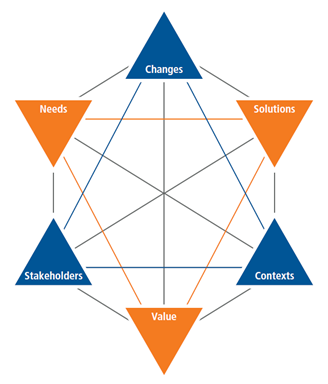
Each component is equally important and necessary to do business analysis. The neglect of one component can have a negative impact on our business activities and the general success of the initiatives. This blog will focus on the component of stakeholders.
BACCM is applied to each area of knowledge in Babok and framing each component to the specific knowledge area. The following frameworks are stakeholders regarding all the field of knowledge:
- Planning and monitoring business analysis: Conducting an analysis of the stakeholders to ensure that the planning and monitoring activities reflect the needs of the stakeholders and calculate the characteristics of the stakeholders.
- Deviation and cooperationManagement of cooperation with stakeholders who participate in business analysis work. All stakeholders may participate in different roles and at different times during change.
- Life cycle management requirements: Work closely with the main stakeholders to maintain understanding, agreement and agree to requirements and designs.
- Strategy analysis: Cooperating with stakeholders to understand the need for work and developing the strategy of change and the future situation that meets these needs.
- Requirement analysis and design definitionAllocating requirements and designs so that they are understood and usable by each group of stakeholders.
- Evaluation of the solution: Developing information from the stakeholders about the performance of the solution and delivering the value.
Mobility can be successfully alongside people/stakeholders as a business analyst part of our role. Both the stakeholders related to our work respond differently to change the shift efforts. This difference is not found only between both stakeholders, but it can also develop during the individual profession.
Dr. Spencer Johnson reduces a short fictional story about the movement of change in his book entitled “Who is my cheese?” The characters in the book represent the different ways that we see ourselves and others respond to change.
Characters:
- Sham: Always search for what is different, expecting change.
- Scurry: It quickly moves to work when the change occurs.
- Hem: He denies and resists change and knows that he says, “It has always been done in this way.”
- HaW: Change and adaptation contemplates after processing and accepting change.
As business analysts, we support the organization’s ability to transform successfully. Through our initiatives, we engage and guide the stakeholders who embody the characters of Sham, Sham, Tannah, and Haw.
Whenever we get to know the stakeholders and our jaws represented by the personality, we can determine how to involve all the owners of interest during our work activities. We want to do this early in sharing as much as possible. Below is a few points to look at each character in “Who is my cheese transfer?”:
- sniff:
- Pro: It is the early adoption and a lawyer change. It is known for finding new options to face challenges in the organization.
- Chews: He may distract him from the next “shiny” thing.
- Strategy: Benefit their enthusiasm for new ideas.
- Procedures: Increasing them early in brainstorming sessions and innovation discussions. Encourage them to spread the word and show adoption.
- Communications: Providing updates with the latest developments and possible opportunities.
- jog:
- Pro: fast to work and accept change.
- Con: It is a reaction and may not understand “why” change must occur.
- Strategy: Take advantage of their willingness to act.
- Procedures: setting tasks that require quick implementation. Provide clear and brief guidelines to ensure their understanding of goals and move forward in the right direction.
- Communication: Be direct and to this point. Check regularly to ensure that they are on the right track and treat any problems immediately.
- hem:
- Pro: It provides a historical reference on “why” and “how” things have been done so far.
- Con: It can be contradictory and resistant due to the unwillingness to abandon what has become comfortable.
- Strategy: addressing their resistance to change.
- Procedures: Providing thinking regarding necessarily for change. Help them see their role in achieving the future situation. Including them in discussions to collect their visions and address their concerns.
- Communication: Patience and sympathy. Make a safe environment to exchange their fears, listen truly and understand their views. Use data and evidence to demonstrate the need for a change in thinking.
- Hao:
- Pro: Through meditation, the team can weigh and ensure the application of thinking to change efforts.
- Con: The analysis process can create the risk of loss of chance that change will create.
- Strategy: Supporting their studied approach to understanding the need for change.
- Procedures: Give them time to process information and purchase in change. Encourage them to share the logic behind the change.
- Communication: engaging in detailed discussions and providing comprehensive information. Highlighting the benefits and potential risks of change to help them understand.
The point I thought was teamwork. What if each member had strong tendencies for a person? Or was the team a mixture of the four characters? For example, it will be important to know early if the team has tendencies. I can predict a team eager to find the way of change, but move in many directions simultaneously and engage in “experience and error” methods until the future future state is achieved. What if Sham or Sham is added to the team? Will these individuals balance the team?
As business analysts, we may have or do not face the luxury of choosing that we are involved in, but we can definitely conduct an analysis of stakeholders to understand those who participate and create a participation strategy to increase the strengths that each character brings to the team.
“Who is my cheese transfer?” It is a simple story with an applicable message to the work of our business analysis and our personal life. I invite you to read the message contained in this book in the Center for Development and Thinking in this book.
Questions to think about:
- What is the character you call more? Did this change over time?
- What is the character that represents the best that you participate in?
- What is not going well in the associations of stakeholders? Why?
- What are the strategies that you can use to take advantage of the positives and reduce the negative aspects of each of your associations?
Predictions: 86