Latest Job Opportunities in India
Discover top job listings and career opportunities across India. Stay updated with the latest openings in IT, government, and more.
Check Out Jobs!Read More
Political participation
very
Study whether the description of the political participation shown in Milbrath (1965) is a realistic description of political participation. Milbrath provides a detailed description of how and why individuals participated in politics. The goal here is to verify whether the descriptions of Milbrate add to the remarkable political participation patterns.
The focus is on different levels of participation, not on the choice of voting and other relevant concepts. The main test is to verify whether the dynamics of political participation occurs.
Entities and state variables and standards
The Milbrath model for political participation has been simplified. There are global agents and variables; Stains do not play a role. The agents have individual characteristics, most of which are open to change according to the system dynamics. The characteristics are (opposites in square brackets): active (negative), public (secret), independent (compatible), approaching (avoiding), continuous (accidental), separation (inputs), expressive (mechanism), and social (non -social). Each feature is designed as a continuous variable. The agents also have a specific social social status (SES), communication parties in society, and time is tracked to determine the time spent by agents in society. Political participation is represented in the levels, ranging from 0 (indifference) to 12 (occupying his position).
Operation and scheduling overview
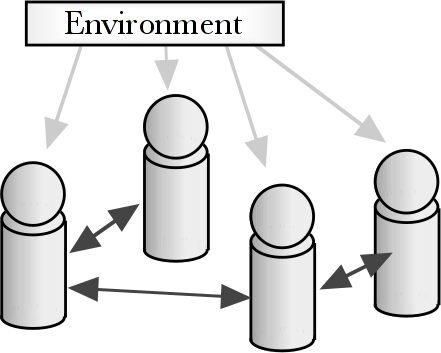
The agents are subject to the stimuli with the possibility PThen it interacts with other factors with a possibility S.Then he moved to another society with a possibility P. Political participation levels are updated at the end of each round, supposed to be one week. The P, Q and R values are determined by the political environment (developed differently, the political environment is determined by P, Q and R). The agents reserved the date of their political participation.
Issue notes
Updated for Netlogo 7.
Publications associated with them
Redin, D. 2005. “Simulation of Political Participation”. MSC thesis. Oxford University.
REDIN, D. 2007. “Milbrate Framework for 1965 for Political Participation: Institutions and Social Capital.” Contemporary issues and ideas in social sciences 3 (3).
REDIN, D. 2011. “The role of social capital in the political participation of migrants: evidence of the model -based modeling.” SFM 27.
https://www.comses.net/codebases/4180/releases/1.0.3/