Latest Job Opportunities in India
Discover top job listings and career opportunities across India. Stay updated with the latest openings in IT, government, and more.
Check Out Jobs!Read More
Tanakh in the trial – by Jacon Horsley and Laurent Jinot
Reading from and responding to Our God is your God, too, but he chose us: articles on Jewish powerWritten by Laurent Jinot.
Part 1 Part 2 Part 3 Part 4 Part 5
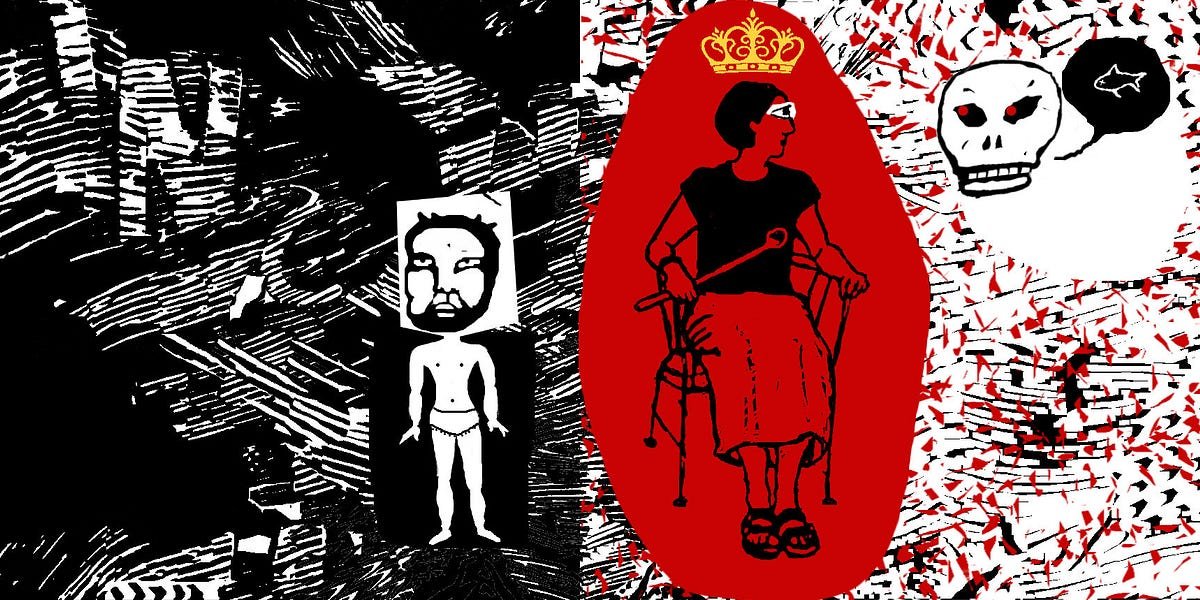
(Art by Michel Horsley))
From Chapter 8, “Satan’s hoax and concealment of the mental God of Israel::
I am neither Darwini nor an atheist. Simply put, I reached the conclusion that the Old Testament has no value to transform the origin of the universe and the purpose of life and humanity, and no useful guidelines to present it in our search for truth, beauty and justice (p. 147).
(Guyénot goes to describe how it is not a gnome too.)
Although it is not a thesis statement, the above is a clear indication of Guyénot’s position, regarding the old era, which seems to me somewhat emotional. Guyénot collects many books, and each clip in OT, together, says that there is no value in any of them.
This is clear that this is a false phrase. It cannot be defended on any moral reasons. It will be impossible for Tanakh deep influential –Even negatively– If it has no value. One cannot move the masses or form a history with a document, belief, or philosophy that has no value. that it IPSO reality impossible.
As I said to Guyénot directly, it is also impossible, and it is not wise, to separate goodness from bad when it comes to the old era; I mean, that any abuse of power that can be placed at OT feet cannot be separated from the strength you keep. Power can only be used if there is a force that must be abused.
If Guyénot’s position on OT is an emotional position, this raises the question about the validity of this matter in relation to the biggest – more convincing – about the Jews organized in the history of the world.
The desire to get rid of the child and Bathwater – to condemn something or person who causes us suffering – is understandable, albeit unreasonable.
Let’s use a human example, unlike a book: The sexual predator Jimmy Saville made a lot of “good” in his life, in terms of collecting money for charity and building hospitals (which later became his land hunting). He also did the unforgettable evil, and as soon as the truth came out of Sir Jimmy, almost no one tried to say that we should not condemn him, just because he did bad things, in light of all the good he did.
Perhaps Jimmy Savil is the best example, because the evil he did was So Silver, prolific production, to the point that it is more than enough to cancel any good job. We can definitely cite a meeting of less examples. Cangle requires culture along the logical basis that even a non -racist commentary on social media cannot be replaced by any good deeds or words, before or later. One can destroy an ideal reputation effectively, within the largest community of the global village, with one wrong word.
Somewhere between these maximum letters, with cases like Woody Allen or Roman Polanski and Kevin Spacey or Bryan Singer – Flash makers seem to be very morally bankrupt in their private lives – it seems that it is only reasonable to re -evaluate their business through their sins lens, as much as the means. He is message.

One cannot separate goodness from evil in humans (only God can do that). A person can do a thousand good deeds, but the evil act – while it does not eliminate the effects of the good – in terms of our perception becomes as if good was not present. If they can commit any likely work like that – whatever the matter – we assume that they may have done similar things on other occasions, and that they will do it again, while giving half the opportunity.
With the Bible, this type of thinking hardly applies. However, Guyénot found enough clips in OT to persuade him to hatred, and like finding cyanide in Kool-Aid, he wants to take out the entire barrel.
First of all, this depends on the interpretation of the text literally and through the lens of our current moral cultural framework, which is something that one cannot simply do with ancient legendary texts. One can definitely evaluate the methods in which the Bible is running AppliedHe believes, literally took by others – in the past and present – and how this can Lead To the great evil. But the extension of this ruling automatically to the text itself is unreasonable.
It is true that I presented the opposite issue with the writings of Alison Crowley (in Deputy KingsBy saying that they are defending the sacrifices of children and other things. I remember this as evidence, both that Crowley was committing such actions in his life, and that the people who followed him are likely to commit similar acts (and that Crowley will have to know this and aim until this happens).
The difference, first of all, is that Crowley’s life, his actions, his writings, and his influence cover a much shorter time frame that has not started for a long time; Second, he is just one man He can It is evaluated for ethical attributes (or their absence) and varies with writings.
With the Old Testament, there is no such thing – even if Guyénot wants to argue that it is. There are definitely judicial orders that were ethical at a time when it seems very immoral for us now. It is clear that there is a problem when such writings are applied in the context of the day (Facebook Netanyahu and the Amani). Saying that the Old Testament is very defective – even it is likely to be catastrophic – as a moral compass for social policies is a just statement, and even necessary; But this is very far from showing that it has no value.
https://childrenofjob.substack.com/p/tanakh-on-trial