Latest Job Opportunities in India
Discover top job listings and career opportunities across India. Stay updated with the latest openings in IT, government, and more.
Check Out Jobs!Read More
🚀 Discover India’s solar strategy: Why is the solar energy worth a second look? Opinion Environmental works
— the latest insights
In this post:
India celebrates its landmark of achieving half the total electrical energy that has been installed (484.8 GW) One of the non -fuel -based energy resources, such as imagine In the NDCS contributions (NDCS) for the year 2030 under the Paris Agreement.
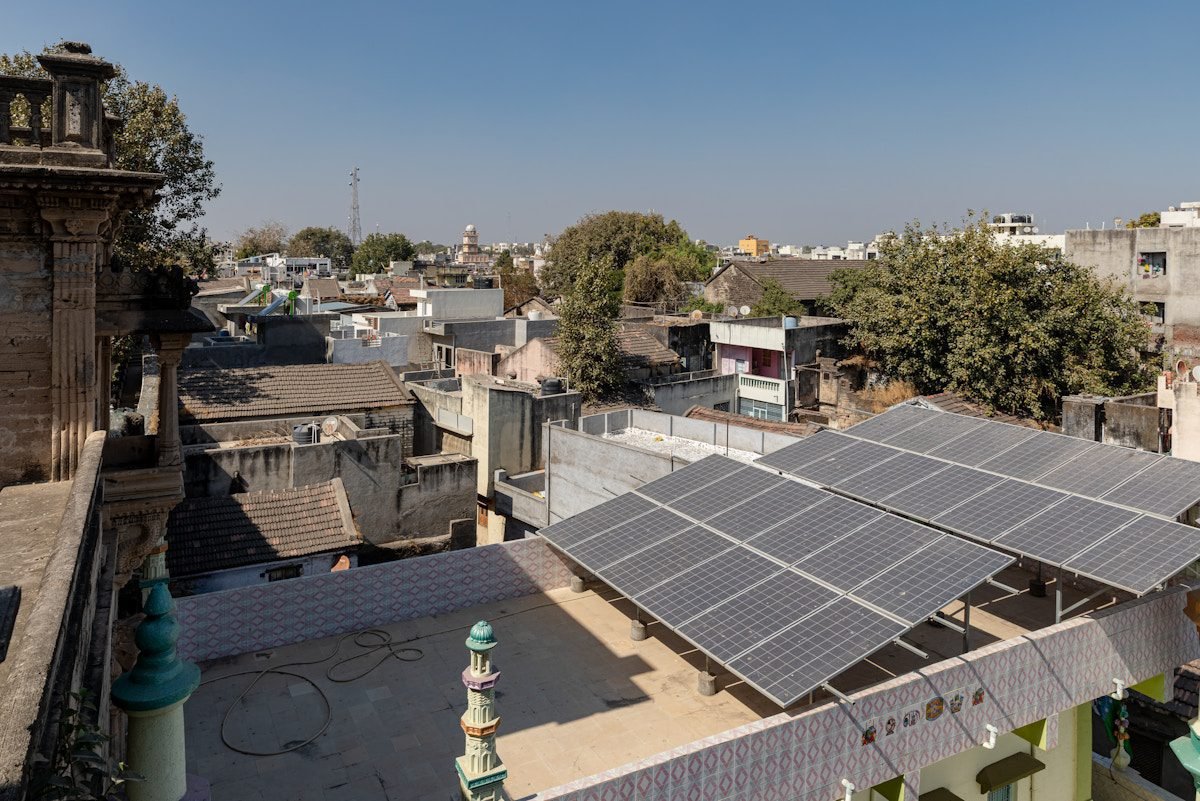
The majority of the non -daily energy in India comes from the SPV solar systems (SPV) with Installed capacity 116.25 GB.
Solar energy can be harnessed mainly through the SPV road by converting sunlight directly into electricity through solar cells, and through the path of solar energy (S), and collecting solar energy as heat, which can be used directly or converted into electricity.
However, cOST effectiveness, ease of publication and policy support SPV systems were placed at the forefront of India Safi zero agenda. The share of solar thermal technologies in the total solar capacity installed in India is only 0.28 percent. Their contribution to the power mix remains marginal, with only proven capacity 329.5 megawattsOf which only 101 megawatts work.
In India’s festive career, a decisive question remains: Are we very dependent on SPV while ignoring the promising capabilities of ST?
Dependence on imports
There is a need to evaluate the possible consequences for the high -level accreditation of SPV.
This is because the raw materials participating in the manufacture of SPV panels such as polysilicon and Incot/ Wefer (the raw material used in the manufacture of solar cells) and solar cells are often imported, while other parts, such as the aluminum frame, the link/ wire and breathing box, are manufactured locally.
In 2023-24, 56 percent and 65 percent Of the total imports of solar cells and stereotypes, respectively, were from China alone.
Even after an investigation Self -reliance In solar manufacturing, the great dependence on India is to import basic minerals to support its growth in the renewable energy sector.
Silicon, telorium, Andium and Pigum are basic minerals participating in the manufacture of SPV systems. India imports 40 percent From these minerals from China. Moreover, the country 100 percent Import dependent on lithium, cobalt and nickel, which are used in electrochemical batteries.
Production gaps
Solar panels and solar cells have gained traction in India over the past three years due to global geopolitical instability such as Commercial tensions and supply chain disorders. The government of India (Goi) has taken some steps necessary to achieve self -sufficiency in the manufacture of solar units, such as Applied list of models and manufacturers (ALMM)Which includes the models and the list of manufacturers qualified to use them in any government project, and Production incentives (PLI), The Goi initiative, which provides financial incentives for companies based on increased production of local manufacturing.
However, the current ability of solar panels and solar cell manufacture 74 GB and 25 GBrespectively. This is not sufficient to support the future requirements of the 500 GB of the inaugural capacity by 2030 because not all facilities are operated at full capacity, wears solar units faster, and they need to be replaced, and cell production is limited to 25 gigawatts.
Get rid of waste at the end of life and restore critical minerals
There is another problem with the climbing of photovoltaic installation, which is the large amount of the resulting solar waste. By 2030, it is expected to create almost India 600 km of solar wasteIt is a volume equivalent to 720 Olympic swimming pools.
According to India Electronic waste rules (management), 2022Solar PV manufacturers have to manage secure assembly, storage and recycling panels used under the responsibility of the expanded product (EPR). However, at the present time, only about 20 percent The materials are officially recovered from the neglected solar panels, while the remaining 80 percent is treated informally or dumped in waste burials.
The neglected solar panels contain critical minerals such as silicon, copper, cadmium and telorium, which recovered Mineral security can be supported in India. However, if they are not appropriately managed, toxic elements such as lead and cadmium can contaminate soil and water, especially in remote areas and population where solar energy projects are found.
The economic feasibility of recycling solar panels is largely dependent on the restoration of valuable minerals, which constitute only a small part of the weight of the plate, which makes the process less attractive financially.
Invisible dealing and getting rid of dangerous health risks constitute the workers involved in dismantling and recycling solar panels. According to the World Health Organization report, a large percentage of child labor is often Youngness up to five yearsParticipating in the informal electronic waste management sector in India. Therefore, responsible solar waste management is very important at this time.
Lost opportunity
Although Solar Thermal may not replace all solar photovoltaic applications, there are a few that can be better managed using thermal solar energy.
Unconscious solar thermals can be used, as an entire collector area picks up sunlight without concentration, for low temperature applications such as water heating.
However, solar concentration systems (CSP), in which mirrors and lenses are used to concentrate sunlight on a small absorption area, suitable for high temperature applications such as power generation, institutional cooking and heating industrial processes.
In India, industries are consumed 40 percent From the final energy primarily in the form of heat, which comes from fossil fuels. Therefore, CSP can play an important role in removing artificial carbon. Regions such as Rajasthan and Ghajarat have high solar radiation (the power of sunlight received for each unit on the surface of the Earth). In such areas, the CSP technology with the appropriate thermal power storage (TES) can be a potential option to generate clean energy around the clock. The collection of independent solar energy and power generation makes it suitable for power generation for hybrid power plants.
Capacity integration (200-300 dollars/kilowatt hours) Electrochemical batteries in large -scale SPV plants to prevent low solar output due to the changes in the sun’s rays that were received on the Earth are not economically viable. In contrast, CSP, along with TES, provides an effective alternative to cost, allowing trusted electricity and connection to request.
Recently, the government planned to Withdrawing exemptions from the shipping system between countries for solar solar energy, photovoltaic Projects. This will increase the cost of SPV power, which may affect their competitiveness and widespread publishing in India. Nevertheless, government support for solar thermal technologies remains limited compared to SPV technologies. The new and renewable Ministry of Energy offers interest subsidies for solar water heaters, but there is a minimum support for CSP.
India is currently dependent on the imports of the tube that have been evacuated, which is a type of inclusive inclusive tube, Primarily From China and Turkey. While there Relatively Import dependence on glass mirrors, and India has the ability to manufacture local manufacturing for other components of solar thermal technologies such as structural frames, tracking mechanisms, tubes, valves and pumps.
Although materials such as glass, copper, aluminum and insulation used in solar energy -energy colleges can theoretically recycle, the country currently lacks organized formal recycling systems.
Diversification is the key to security
India does not need to choose between solar PVs and solar studies; It needs to embrace both strategically. The correct technology can be published for the correct need. The solar PV energy is ideal for electricity needs, while thermal solar energy can be used for both heat and electricity demand. The most balanced approach that includes PV and Solar Thermal – which was identified by supporting the strong policy, manufacturing and waste management – is necessary to ensure energy safety.
It is time to reflect this lost opportunity and start watching Solar Thermal as a basic partner for zero growth in India.
Dr. Shobham Jain is a co -researcher in the Ashoka Center for the Transition of Energy centered around people.
Vaibhav Chowdhary is the director of the Ashoka Center for the Transition of Energy Corporation around the people.
It was originally published under Creative rumors by 360info™.
Learn more at: https://www.eco-business.com/opinion/rethinking-indias-solar-strategy-why-solar-thermal-deserves-a-second-look/
Don’t miss out with Eco-Business: News, Opinion, Jobs, Events, Press Releases and Research for topic Energy
—
**Additional Resources & Tags:**
– Written by:
– Published on: 2025-09-10 12:45:00
– Tags: ,
– Related Rules: [rule_{ruleNumber}], [rule_{ruleNumber}_plain]
**Visuals & Media:**
– Featured Image: https://eco-business.imgix.net/ebmedia/fileuploads/52783560730_c19462baa4_o.jpg?fit=crop&h=801&ixlib=django-1.2.0&q=85&w=1200
– Enclosure Link:
**URL & Links:**
– Post URL (slug): indias-solar-strategy-why-is-the-solar-energy-worth-a-second-look-opinion-environmental-works
– Encoded URL: https%3A%2F%2Fwww.eco-business.com%2Fopinion%2Frethinking-indias-solar-strategy-why-solar-thermal-deserves-a-second-look%2F
– Decoded URL: https://www.eco-business.com/opinion/rethinking-indias-solar-strategy-why-solar-thermal-deserves-a-second-look/
– Redirect URL: https://www.eco-business.com/opinion/rethinking-indias-solar-strategy-why-solar-thermal-deserves-a-second-look/
– Source Domain: www.eco-business.com
**Meta & Miscellaneous:**
– Publication Time: 1758600887
– Hashtags: #Indias #solar #strategy #solar #energy #worth #Opinion #Environmental #works
– Custom Prompt/Note: Prompt
—
**Sample Post Title:** India’s solar strategy: Why is the solar energy worth a second look? Opinion Environmental works