Latest Job Opportunities in India
Discover top job listings and career opportunities across India. Stay updated with the latest openings in IT, government, and more.
Check Out Jobs!Read More
✨ Explore The “Net” component is the spirit of tribal cooking in northeastern India
— the latest insights
Today’s article:
In Demapor, India, 32 -year -old Analya lives in her best life as a pioneer and a blogger in Demapor, Nagalland, where she originally belongs. Her wide house stands from one floor in a large complex surrounded by trees that emerged in new papers in the village of Czech, just a few miles from the newly developed Asian highway that connects India in northeastern Asia via Myanmar.
The permeable smell begins after three to four days
Inside her kitchen, divided into a dining area and a cooking area where the bed uses a modern gas stove and shoes, AYE cooks the traditional Naga meal from the pork curry with the axis, or Akhuni. It is the axis axis, the fermented soybean paste, which brought us here to see how it is prepared and cooking in Carrie, broth or sauce in a tribal family of indigenous population that proudly declares that it is its distinctive food.
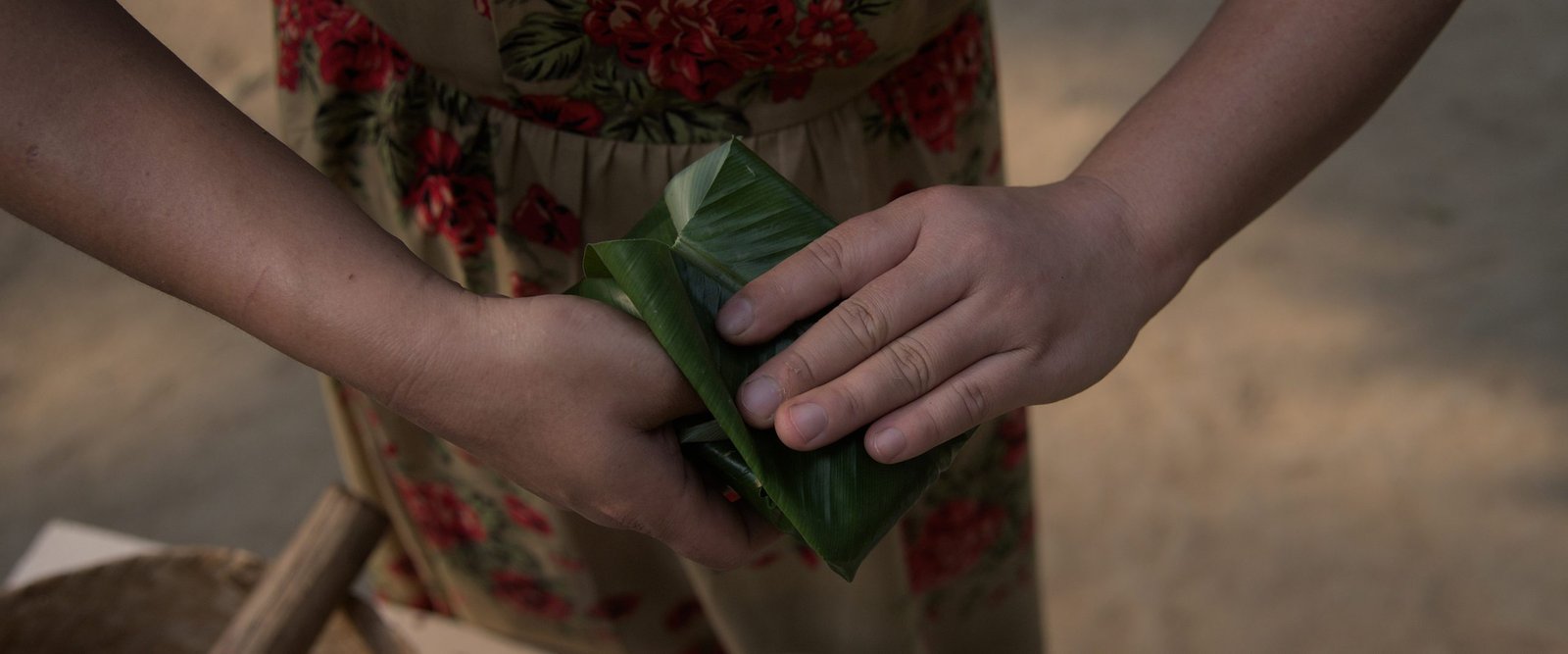
Even when they do not cook, the stove continues to smoke the beef and pork on a wire mesh along with the cakes hub coated with wild leaves for fermentation. Before smoking, soy pills are washed, pressure and bombing on a dough early in preparation. The permeable smell (and taste) usually begins after three to four days when it goes in the kitchen, indicating that it is ready to cook.
“Sometimes, Maggots are formed around the axis paste in a day or two. But this is good,” he said, adding that the quality of wood also affects taste.
What can be considered a source of inconvenience to the smell out has a Pavlovian effect on original taste buds like Aye’s. But while she was studying in New Delhi several years ago, I almost entered a battle with the neighbors. She recalled, “We were cooking hubs and pork for a job in the place of my friend and some women knocked on the door demanding what was cooking.”
“One of the neighbors told us that someone had even submitted a police complaint when axes were cooked.”
Keol is a strong relationship between food, purity concepts and pollution
Such incidents are not common among immigrants in the northeast in urban cities in India. It carries strong Mengeoloid features unlike most Asians in the southern. People from the northeastern societies routinely exposed to racial discrimination and attacks as well as housing discrimination of their eating habits between other cultural differences. What happened with AYE was recently filmed in an independent movie, axisIn the Humonbur region, Delhi, which turned into the Chinese neighborhood of the northeastern companies, especially food. In the film, the neighbors were deceived to believe that the fermented food that is cook was in fact an open sewage tank.
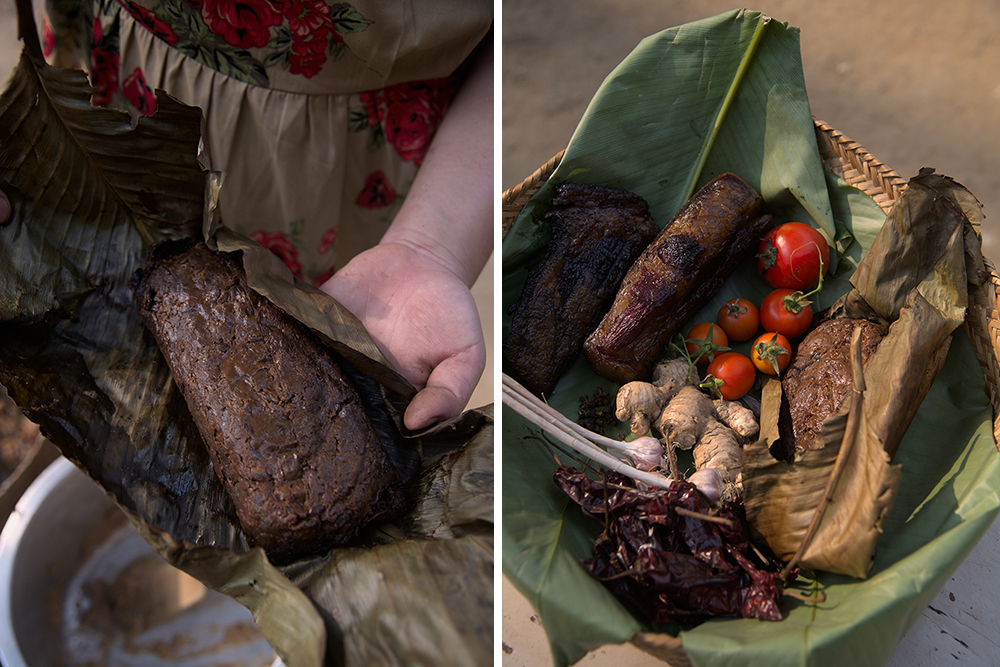
(Left) a completely smoked collection and chimney
It was described by the anthropologist Dolly Kikon, who is studying at the University of Melbourne, as a “challenge” to capture the taste and smell of my brother. And I wrote in a paper entitled, ” Fadr.
In the context of the “mainland” city like Delhi, where South Hindu -Hindu societies form Kikon in a strong relationship between food and concepts of purity and pollution. She told me: “In the food world of food, the smell is very central, in terms of distinguishing between what is pure and contaminated.”
In her intense research on this topic, Kikon found that many owners and neighbors in Indian cities complained about dry fish or fermented soybeans who call it Ganda (Dirt) or Baddoo (Net) in Indian. Kikon added: “This shows us how much purity idea is not what you see, like this is meat or fish, but in the sense of what smells it,” Kikon added.
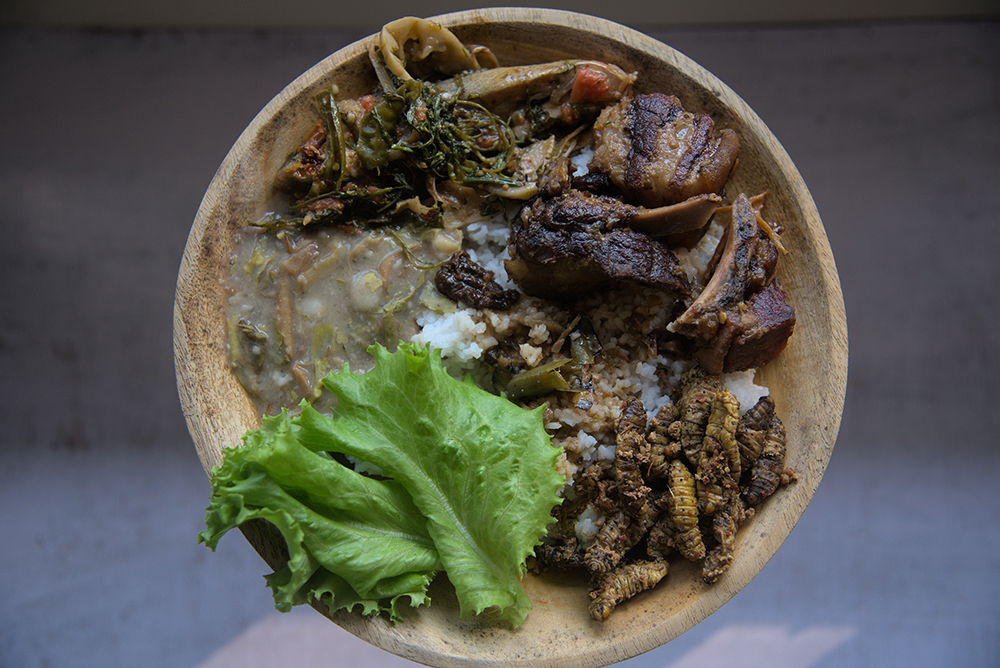
A plate of traditional toxic meal that features cooked pork smoke with axis.
But here in Nagalland, Aye is not considered not my apologies in owning a wide range of local organic meat and ingredients that are eaten by more than 16 official hat and several hundreds of clans, most of which are still traditional Jhum (Oblique and burning) agriculture. In fact, almost every tribe follows its unique fermentation process – such as the Naga Ao tribe known as the colocacia esculanta that grows in the wild. Foamous bamboo exchange and dried fish are consumed uniformly across the northeastern tribes, who follow their origins to the previous Burma, Tibet and the Chinese province of Jonah.
AYE visual notes on Instagram are expressed in cooking with everything from pork, fish, beef to frogs, snakes, ships and snails. All except dogs, because they are a sensitive subject in the state, which was prohibited a temporary ban on commercial sale of dog meat in 2020. Belief listed with meat that causes a Corona virus outbreak.
She said: “Many food bloggers do not publish things like frog legs … I photographed the cooking process completely and ended with it with many negative comments.” But Aye is still not annoyed, determined to enhance the Naga cuisine with its original style.

Inali Aye, the pioneer of food and blogger, shares her story between cooking and shopping in Market Dimapur.
Certainly, what is palatable is related to a place and a culture, but with the latter’s globalization as products, especially Western fast food or Italian meals, some foods are now more universal than others. Writing about the disgusting food museum in Sweden New YorkerJIYYANG FAN found that 29 of 85 of the displayed were Asian, including 12 from China. Many of them, such as shark from Sweden, Filipino shrimp, and a wet herring called surströmming, and scent scent (fermented throat).
Aye is still not upset, determined to enhance the Naga kitchen in its authentic style
In fact, the original foods are often exposed to the risk of affecting the features of the eccentric to suit a wider plate. In 2016, Landimliu Pheiga Gangmei presented a hub in Europe when she started taking a truck, Lulu tribal kitchenTo festivals in Belgium and the Netherlands.
“People are familiar with fermented soybeans from Japanese and Chinese cooking, so I presented it, but I kept it separately from the main dish,” said 36 -year -old Chef, who belongs to the Rongeli Naga tribe of Manibur state in northeastern Manibur. “People have tried our food, but they did not come to fill their stomach. Now we have slowly built a loyal customer base, especially while taking them while the epidemic.”
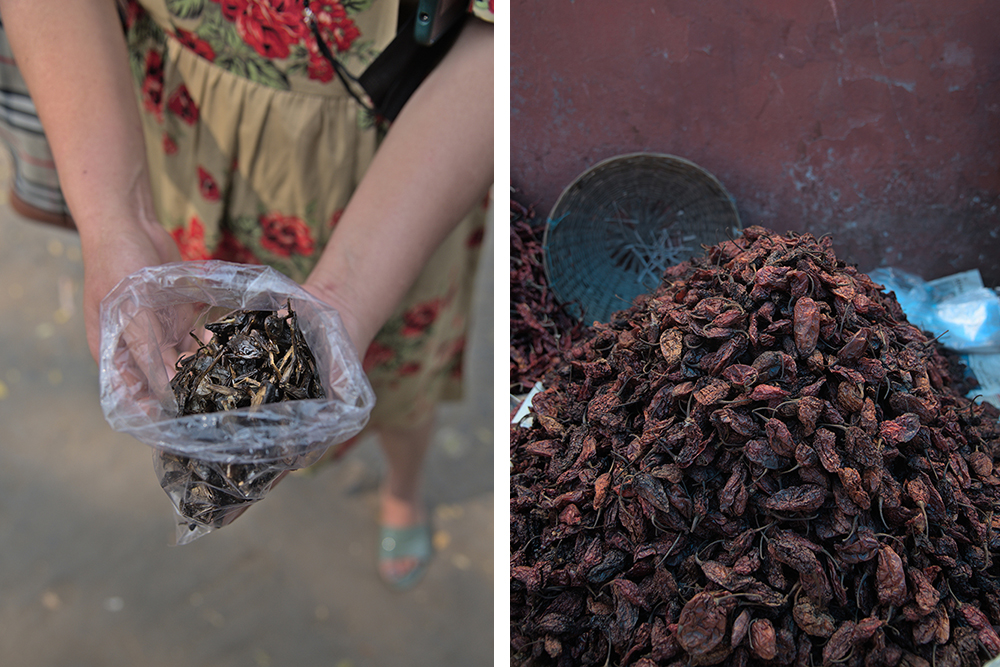
Scenes from DimaPur Market: (left) a package of smoked frogs, (right) pile of dried Raja Mircha (known as the hottest hot pepper in the world also known as Ghost Chili).
Gangmei believes that “adjustments” are equal to the cycle with all foods when they are transferred to the international market. “You will not get this typical Thai food you get in the streets of Bangkok. In fact, they make it more sweet because this is what people like (Belgium).”
Anthropologists in food say that luxury restaurants in the main cities of the Indian mainland usually reduce flavors, especially for fermented foods, to accommodate a wider plate. “But this does not happen when it comes to drinks, whether it is wine or tea,” said Kikon, who also grew up in Dimabur.
“The question is why it provokes wet foods in a country like India, such as the buds of the axis and bamboo, a strong reaction? But as soon as you leave India, do not see this type of reaction coming from the same people.
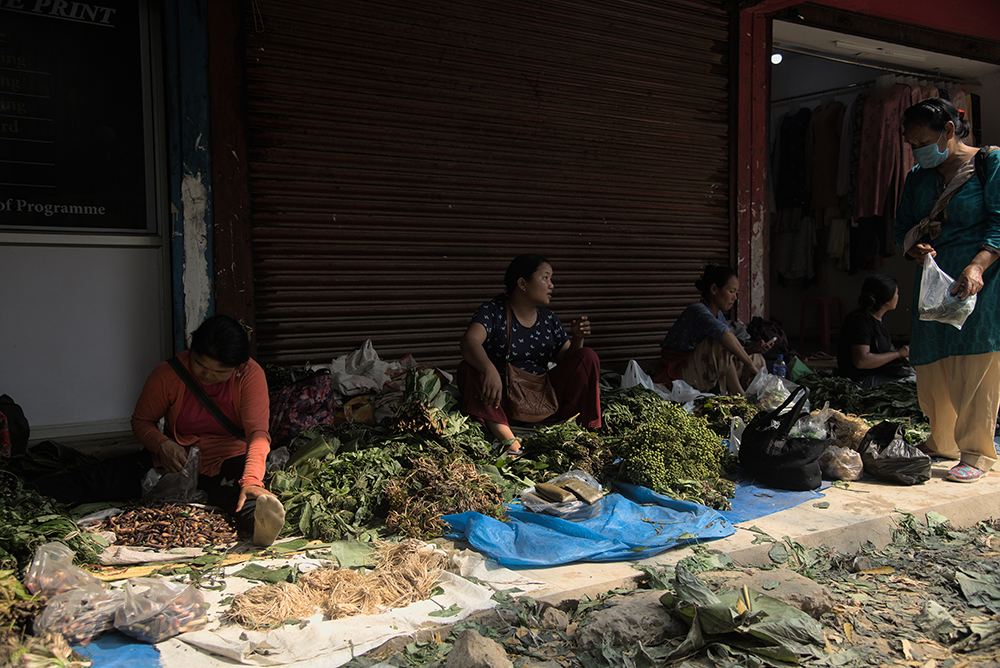
Women sell vegetables in the Dimabur market.
When Actoli Zhimomi made chef at the Five Star Hotel in Kolkata a year and a half ago, she saw that it was a golden ticket not only to take the food of the Naga into an uncomfortable audience but it has evolved the traditional recipes for the beautiful eating experience. She succeeded in managing the traditional Naga kitchen, an ethnic table in Dimabur, for five years after winning the first cooking in her mandate at the famous Horbil Festival in 2013.
We have to keep our individuality
“Itc “The hotels were the first to introduce the northeastern cuisine in their buffets. But we were unable to use many buds of the axis and bamboo due to the smell. Some customers complain of that.”
But despite the profits and praise you received, Zhimomi hit a wall after some time and yearn for the experience of herbs with original morals and fermented ingredients sold in HAATS (markets) hundreds of miles away at home. She has returned to restore responsibility for her kitchen in February, and since then she has been busy experimenting with ready -made axes that can integrate into a group of international fusion cuisine such as cow meat fillet and salads.
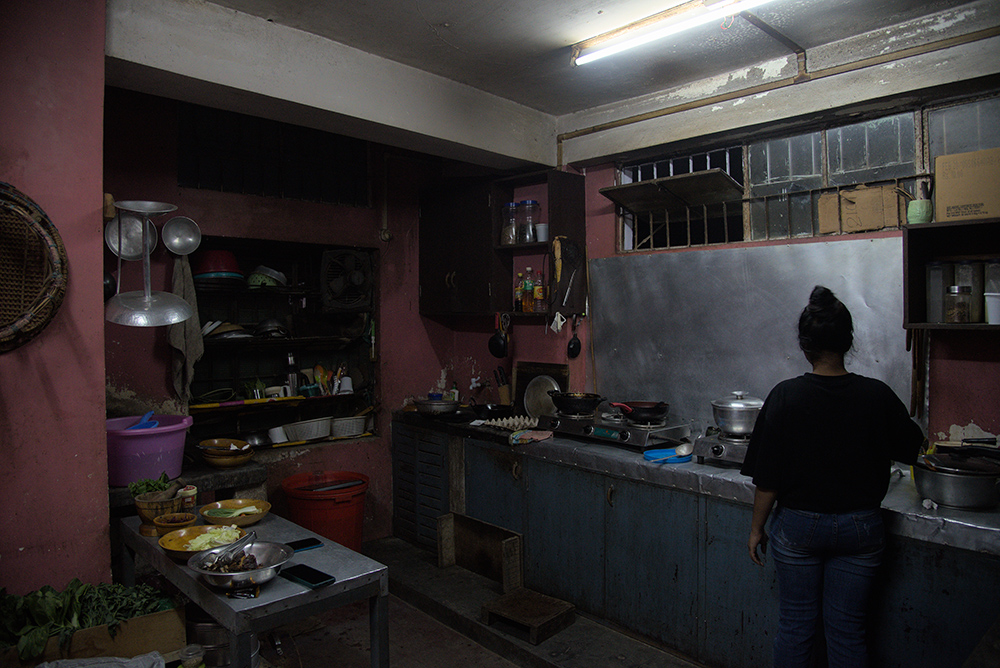
Actoli at work in her kitchen.
She said: “With Anchi and Pambo shooting, I want to make sauces that keep the original taste and smell. You can take it anywhere with you and mix it with anything.”
Zhimomi finds its inspiration in the Korean Missu Paste or Japanese sushi (“The first time I tried it, raw fish did not decrease well”) that traveled beyond its local beaches and obtained in international medical plates. The idea is to normalize the flavor of the axes just as the African Perry Perry or the Japanese mabe fabric can be found in all kinds of foods compact today.
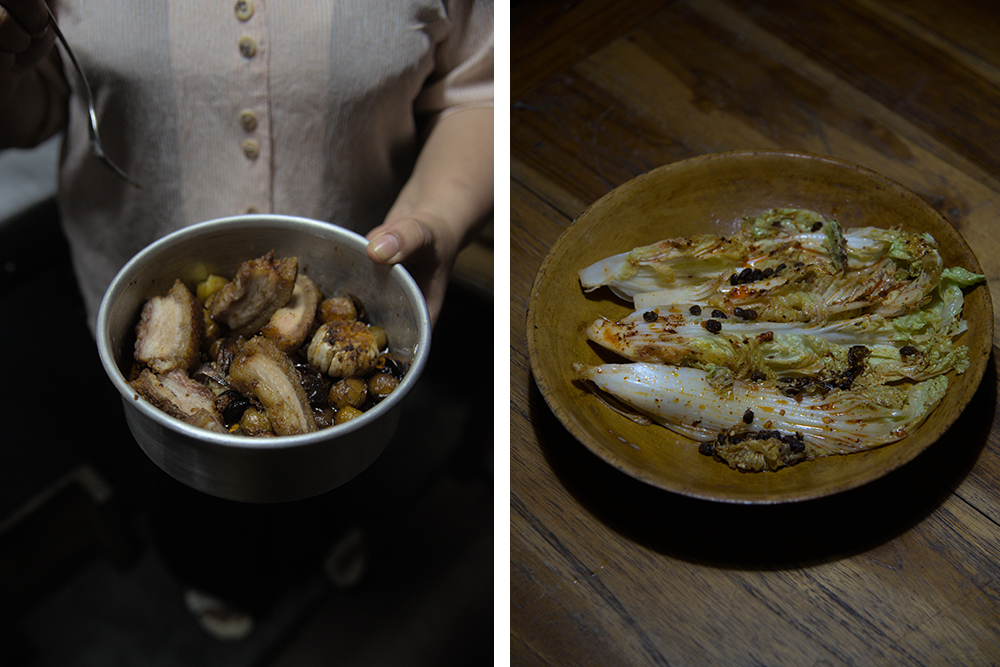
(Lear) Pork grill from Aketoli with its distinctive axis powder, (right) cabbage with a light axis bandage
She said: “We have to maintain the quality of our original food because it only will people know our culture and traditions.”
“If we continue to form it, and there is no smell, we lose the success. Our identity.”
Makepeace Sitlhou is an independent journalist covering India in the northeast of India. It can be accessed on twittermakesyouksks.
Devraj Chaliha, an independent photographer covering the northeastern India. It can be accessed at Chiavraj (AT) Gmail (Dot) com.
Learn more at: https://www.goodfoodjobs.com/blog/a-stinky-ingredient-is-the-soul-of-northeast-indias-tribal-cooking/
Don’t miss out with Good Food Jobs
—
**Additional Resources & Tags:**
– Written by: admin
– Published on: 2022-04-26 16:30:00
– Tags: , Uncategorized,culinary
– Related Rules: [rule_{ruleNumber}], [rule_{ruleNumber}_plain]
**Visuals & Media:**
– Featured Image: https://www.goodfoodjobs.com/blog/wp-content/uploads/2022/04/feature-photo-scaled.jpg
– Enclosure Link:
**URL & Links:**
– Post URL (slug): the-net-component-is-the-spirit-of-tribal-cooking-in-northeastern-india
– Encoded URL: https%3A%2F%2Fwww.goodfoodjobs.com%2Fblog%2Fa-stinky-ingredient-is-the-soul-of-northeast-indias-tribal-cooking%2F
– Decoded URL: https://www.goodfoodjobs.com/blog/a-stinky-ingredient-is-the-soul-of-northeast-indias-tribal-cooking/
– Redirect URL: https://www.goodfoodjobs.com/blog/a-stinky-ingredient-is-the-soul-of-northeast-indias-tribal-cooking/
– Source Domain: www.goodfoodjobs.com
**Meta & Miscellaneous:**
– Publication Time: 1758464193
– Hashtags: #Net #component #spirit #tribal #cooking #northeastern #India
– Custom Prompt/Note: Prompt
—
**Sample Post Title:** The “Net” component is the spirit of tribal cooking in northeastern India