Latest Job Opportunities in India
Discover top job listings and career opportunities across India. Stay updated with the latest openings in IT, government, and more.
Check Out Jobs!Read More
🔥 Remove mystery from Golang channels, arrogance, and optimal synchronization
explained
In I explore my Golang, I wanted to take a deeper diving in some areas I found interesting about the language. Although it resembles a conceptual point of view the way in which other languages deal with synchronization, I did not have much knowledge at the production level surrounding Goroutines and synchronization.
As an engineer, I have a coercion to dismantle things and see how it works – and we hope to gain a fundamental understanding of best practices and contexts that make some patterns more logical.
For goroutines and channels, I created an application using a Sender -> Worker -> Job Style to measurement and compare the results in different scenarios. These comparisons will allow me to see how the same pattern works under the types of loads and we hope to reveal some of the situations in which this optimal pattern was to be followed. On the contrary, with the correct set of scenarios, it is equally important to know when this style does not provide the benefits that I try to achieve.
the The symbol used in the following examples is available here.
After reading educational programs and documents about channels and arrogance, I understood theory and concepts, but I did not know how I could predict when using this type of style is useful and when it might be harmful. Certainly, I knew that just an unlimited icon jamming was not the answer. Therefore, my question became:
When is the synchronization in Golang logical, and at what point there are decreasing returns?
Note: Examples below are based on my eight basic development environment. for you
runtime.NumCPU()The value may be different.
While engineering always deals with multiple variables, eliminating the largest possible number of variables can approach the answer to the question. In an attempt to understand the basics of how Go Goroutines and channels executed, I decided an ideal scenario to add a few variables to the equation as much as possible.
I decided to follow Sender -> Worker -> Job Style using goroutines and channels. I started with This simple example And expanded it.
approximation
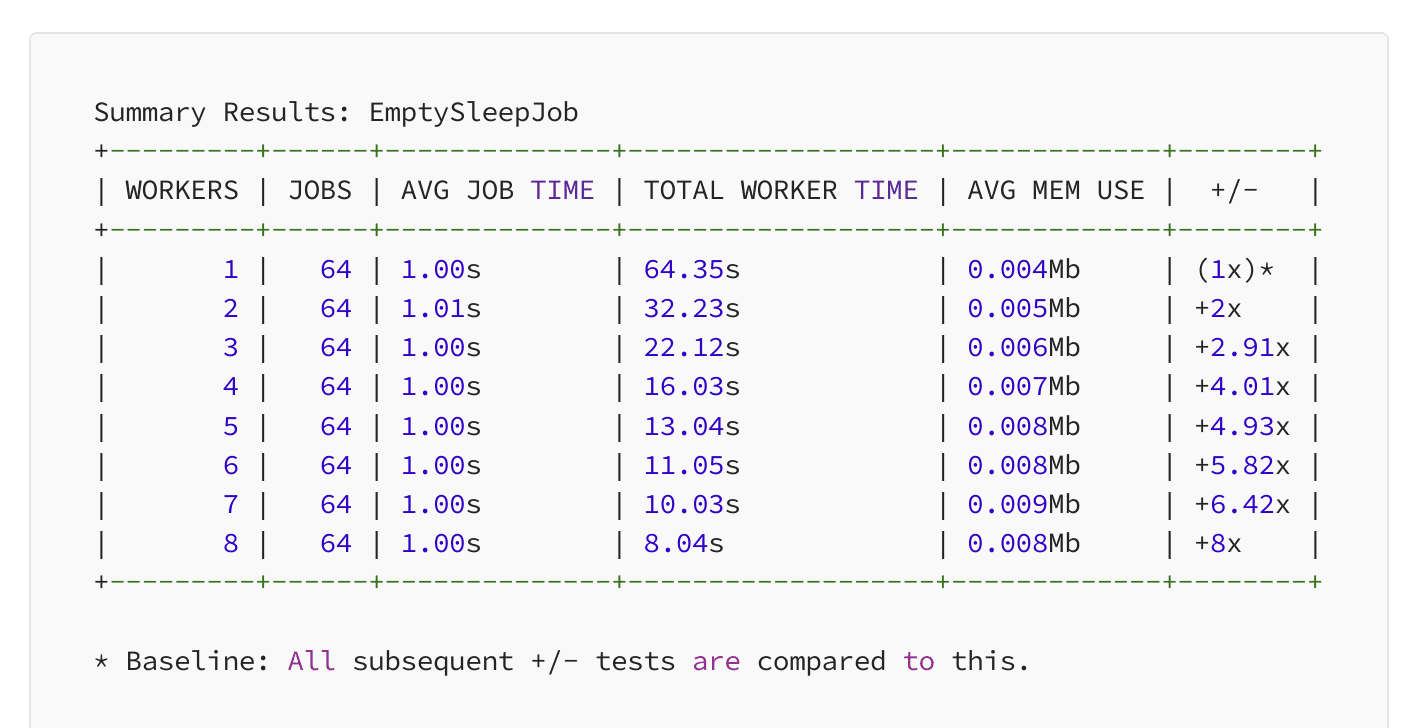
From the topic of the topic, it seems that the most effective way to implement this style is to have the maximum extent runtime.NumCPU() Workers carry out jobs. the runtime.NumCPU()The job will give you the number of central (or cores) processing units available in your environment. This number should specify the best way to take advantage of your devices.
There are no ads to display, please add some
📌 Read more at: Full Article
Tags: #Remove #mystery #Golang #channels #arrogance #optimal #synchronization
Written by Stefan on 2023-04-22 16:04:00
Source Feed: Golang Libraries, Apps, Golang Jobs and Go Tutorials
🚀 Remove mystery from Golang channels, arrogance, and optimal synchronization
uncovered
In I explore my Golang, I wanted to take a deeper diving in some areas I found interesting about the language. Although it resembles a conceptual point of view the way in which other languages deal with synchronization, I did not have much knowledge at the production level surrounding Goroutines and synchronization.
As an engineer, I have a coercion to dismantle things and see how it works – and we hope to gain a fundamental understanding of best practices and contexts that make some patterns more logical.
For goroutines and channels, I created an application using a Sender -> Worker -> Job Style to measurement and compare the results in different scenarios. These comparisons will allow me to see how the same pattern works under the types of loads and we hope to reveal some of the situations in which this optimal pattern was to be followed. On the contrary, with the correct set of scenarios, it is equally important to know when this style does not provide the benefits that I try to achieve.
the The symbol used in the following examples is available here.
After reading educational programs and documents about channels and arrogance, I understood theory and concepts, but I did not know how I could predict when using this type of style is useful and when it might be harmful. Certainly, I knew that just an unlimited icon jamming was not the answer. Therefore, my question became:
When is the synchronization in Golang logical, and at what point there are decreasing returns?
Note: Examples below are based on my eight basic development environment. for you
runtime.NumCPU()The value may be different.
While engineering always deals with multiple variables, eliminating the largest possible number of variables can approach the answer to the question. In an attempt to understand the basics of how Go Goroutines and channels executed, I decided an ideal scenario to add a few variables to the equation as much as possible.
I decided to follow Sender -> Worker -> Job Style using goroutines and channels. I started with This simple example And expanded it.
approximation
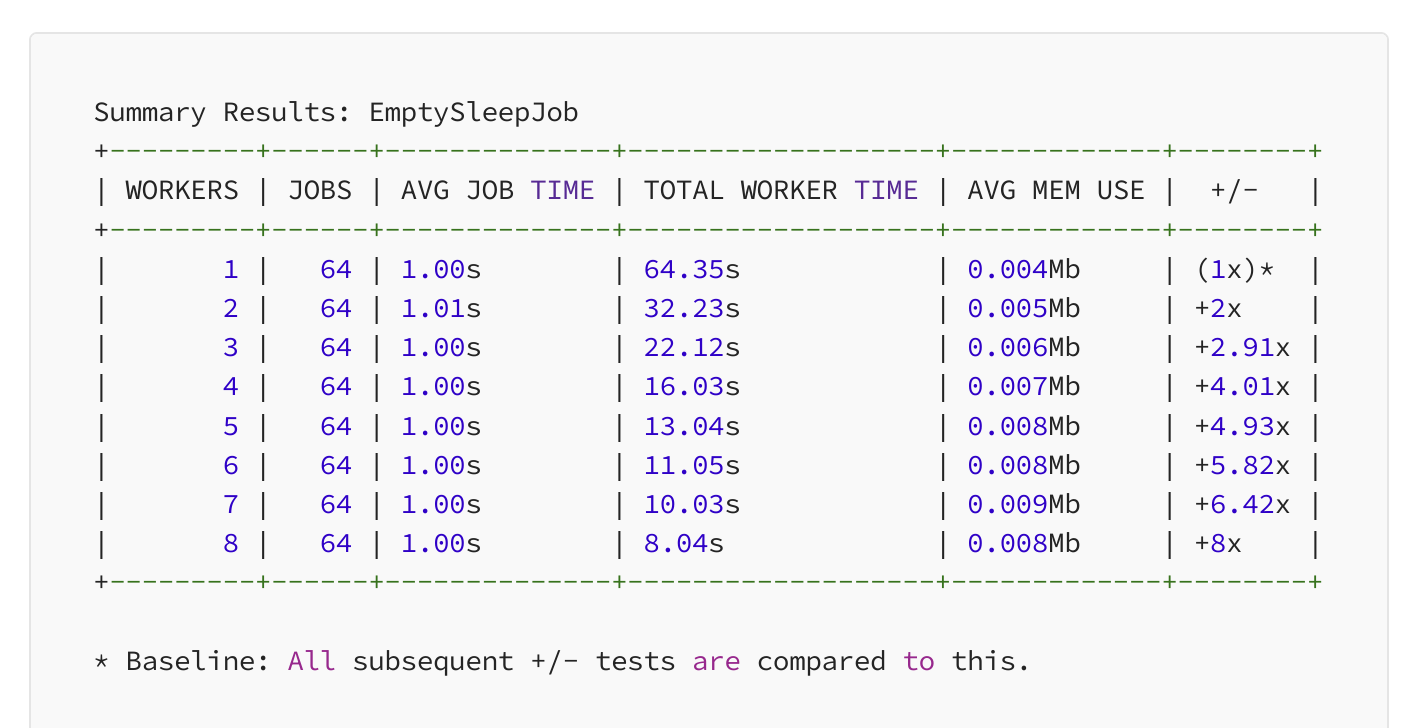
From the topic of the topic, it seems that the most effective way to implement this style is to have the maximum extent runtime.NumCPU() Workers carry out jobs. the runtime.NumCPU()The job will give you the number of central (or cores) processing units available in your environment. This number should specify the best way to take advantage of your devices.
There are no ads to display, please add some
📌 Read more at: Source
Explore more: #Remove #mystery #Golang #channels #arrogance #optimal #synchronization
Authored by Stefan on 2023-04-22 16:04:00
Source Feed: Golang Libraries, Apps, Golang Jobs and Go Tutorials